Award Winning Water: The Joint Water Commission Receives Award for Source Water Protection Efforts
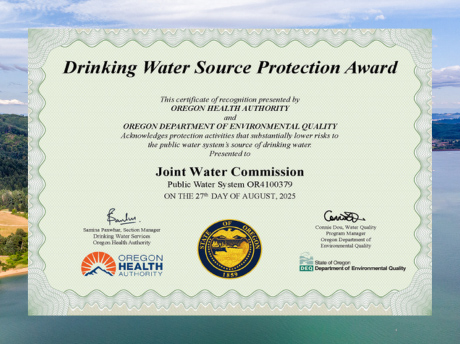
The Joint Water Commission (JWC) recently received an award for efforts towards protecting drinking water sources. This award from the Oregon Health Authority acknowledges protection activities that substantially lower risks to the public water system’s source of drinking water.
JWC’s Drinking Water Sources
All of the water treated by the JWC is “surface water,” which means it comes out of a river or reservoir.
During the winter season, the JWC receives all its “raw” (untreated) water from the upper-Tualatin River. The winter water flows on the Tualatin River are normally quite high and there is plenty of water to meet the needs of fish, farmers and urban use, including the recharging of Aquifer Storage and Recovery (ASR) wells.
During summer or “peak” season, the lack of rain causes the natural water level in the upper-Tualatin River to drop. River water is supplemented with water from the municipally owned Barney Reservoir and a small municipal supply in the Bureau of Reclamation-owned Scoggins Reservoir (also known as Hagg Lake). The JWC begins releasing water from two reservoirs to provide supplemental water to meet customer demands. Both reservoirs were designed to catch and store heavy rainfall in the winter months.
Sources of Water Pollution
Water supplies can become polluted when harmful substances enter rivers, reservoirs, groundwater, or springs. Common pollutants include:
- Gasoline and oil from leaking tanks
- Nitrates and pesticides from farms and lawns
- Pathogens from livestock and pet waste
- Chemicals from industrial sites
- Medications improperly flushed down toilets
Even small sources of pollution can have major impacts on water quality and treatment costs — which is why prevention is key.
5 Tips to Help Protect Hillsboro’s Drinking Water Sources
1. Prevent Wildfires to Protect Water Quality
Wildfires pose serious risks to surface water sources. After a fire, rivers and reservoirs experience increased sediments, nutrients, and pollutants — all of which make water harder and more expensive to treat. Make sure all campfires are completely out and cold to the touch before leaving your campsite.
2. Only Dump Water Down the Drain
Never pour household chemicals, fats, oils, grease (FOGs), paint, or medications down the drain. These pollutants can damage our water sources and increase treatment challenges. Participate in local drug take-back events and freeze grease before disposal.
3. Volunteer to Help the Tualatin River
Keeping the watershed healthy ensures cleaner water for all. Partner with organizations like the Tualatin Riverkeepers, Tualatin Soil & Water Conservation District, or the Tualatin River Watershed Council to volunteer or learn more.
4. Fertilize Properly in the Fall
Fall is ideal for fertilizing, but overfertilizing can lead to harmful algal blooms in streams and lakes — threatening our water supply and recreation. Use slow-release, OMRI-labeled fertilizers or compost, and avoid overapplication.
5. Stop the Spread of Invasive Species
Boating and water recreation may be slowing for the season but remember to clean all your gear once you leave the water. Invasive species can cause damage to our ecosystems and water quality. Wash, dry, and inspect all boats, motors, and gear after use.